11-minute read
[Updated with Responses from Teammates on 10 August 2026.]
Introductory Note from the Team Chief: Due to the length of CATR #35, we decided to break this post, which was nearly the same size, into two parts. Part 9a focuses primarily on the protection of civilians; part 9b will focus primarily on the protection of civilian objects while maneuver forces execute missions throughout the AOR.
COL(R) DJC
________
Why we consider the protection of civilians and civilian objects in military operations.
On 21 December 2023, the Department of Defense (DoD, now the Department of War (DoW)) published DoD Instruction 3000.17, Civilian Harm Mitigation and Response (CHMR). Created in part to meet a Congressional requirement in Section 936 of the FY19 National Defense Authorization Act (FY19 NDAA), it establishes the Department’s CHMR policy, assigns responsibilities to organizational entities within the DoW, and provides procedures for “[t]he protection of civilians and civilian objects [which] is fundamentally consistent with the effective, efficient, and decisive use of force” (DoDI 3000.17, para. 1.2.b.).
Codifying rules to prevent, minimize, and respond to incidents of civilian casualties or property destruction caused by war is not new.
- The Lieber Code, issued as General Orders No. 100 in 1863 during the U.S. Civil War, was one of the earliest modern attempts to regulate warfare. It set out rules for protecting civilians (Articles 22, 23, 25), civilian property (Articles 35, 36), the prohibition of unnecessary destruction (Articles 37, 38), and respect for human life during conflict (Articles 44, 156).
- The First Geneva Convention (1864) focused on medical care for wounded and sick soldiers on the battlefield; established the neutrality of medical personnel, hospitals, and ambulances; recognized voluntary aid societies; and adopted the Red Cross emblem as a symbol for medical personnel and facilities. It did not address the protection of civilians.
- The Hague Conventions of 1899 and 1907 constituted the principal pre‑World War II legal framework governing the conduct of warfare. They established that the means and methods of warfare are not unlimited, restricted unnecessary suffering and destruction, and required the protection of civilians and civilian objects, including hospitals, religious buildings, historic monuments, and institutions dedicated to art and science.
However, there was no enforcement mechanism; protection depended on whether a site was considered defended or undefended; and, because the conventions predated aerial bombardment, there were no specific rules for air warfare before WWII. The unprecedented numbers of civilian casualties and the indiscriminate destruction of cities and other populated areas across the European and Pacific Theaters of Operation led to the Geneva Conventions of 1949, the Hague Convention of 1954, and the creation of the Blue Shield system to mark and protect cultural property.
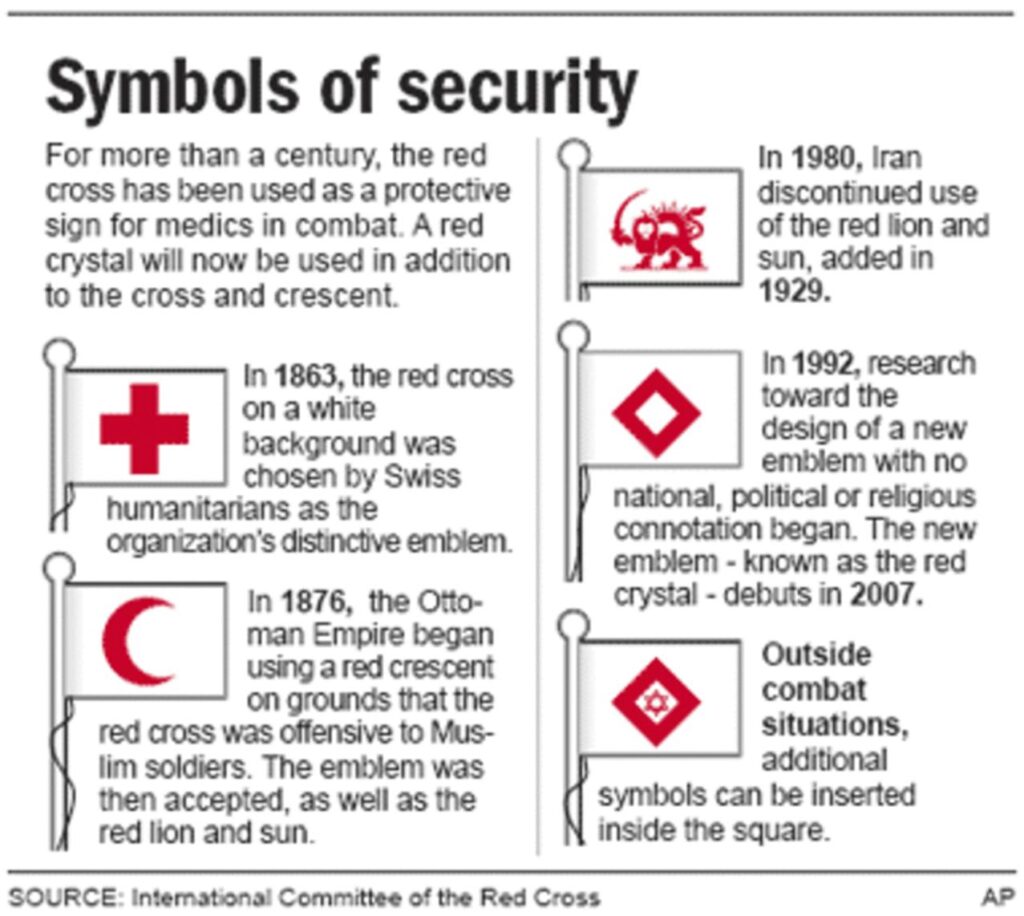
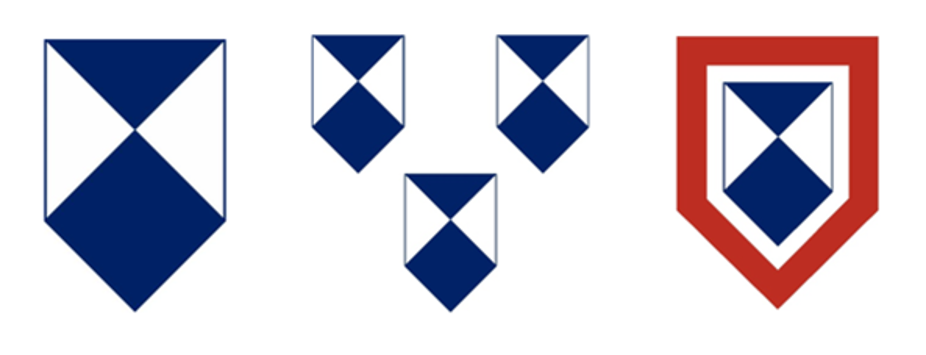
The 1954 Hague Convention Blue Shield Emblems of Protection – Blue Shield International
The U.S. Armed Forces have captured the provisions of the codes and conventions mentioned above in doctrinal publications since 1863. My Copilot assistant created the following chart to illustrate the evolution of those publications.
| Year | Publication | Significance |
| 1863 | General Orders No. 100 (Lieber Code) — Instructions for the Government of Armies of the United States in the Field | First comprehensive U.S. codification of the laws and customs of war for military forces in the field. |
| 1914 | Rules of Land Warfare (War Department, Office of the Chief of Staff) | First Army-wide doctrinal manual specifically addressing the law of land warfare and incorporating Hague Convention principles. |
| 1940 | FM 27-10, Rules of Land Warfare | Updated War Department field manual that revised and expanded the 1914 guidance. |
| 1956 | FM 27-10, The Law of Land Warfare | Replaced the 1940 manual and became the Army’s principal law-of-war manual for more than six decades. It expressly superseded the 1940 FM 27-10. |
| 2019 | FM 6-27 / MCTP 11-10C, The Commander’s Handbook on the Law of Land Warfare | First published in August 2019. It superseded FM 27-10 and was developed jointly by the U.S. Army and U.S. Marine Corps to provide a modern handbook on the law of land warfare. |
Protection of Civilians in WWII.
Protecting civilians was integral to the CA and MG missions from the outset. FM 27-5, United States Army and Navy Manual of Military Government and Civil Affairs, published on 22 December 1943, stated that “As the military occupation of enemy territory suspends the operation of the enemy’s civil government, it is an obligation under international law for the occupying force to exercise the functions of civil governments in the restoration and maintenance of public order. Military government is the organization which exercises these functions” (1943 FM 27-5, para 3.b.; bold font added for emphasis). In liberated areas, civil affairs forces assisted sovereign host nation governments in restoring and maintaining public order.
While FM 27-5 did not formally define the term public order or use the term protection of civilians, it provides sufficient evidence that public order is the mechanism by which civilians were to be protected during war. My Copilot assistant synthesized the FM for me one night and developed this definition from the manual’s perspective:
Public order is the condition created by effective civil governance in which law, security, essential services, and social institutions function sufficiently to protect the population and enable normal civilian life. Military government assumes responsibility for restoring and maintaining that condition when the existing government cannot. (Underline added for emphasis.)
Toward that end, the structure of CA and MG detachments in WWII contained positions filled by vetted Soldiers with bona fide expertise in the following functions, executed during combat operations in approximately the order presented below, which Copilot synthesized from the 1943 manual:
- Security and public order (police, protection of people and property, crime control).
- Emergency life-saving actions (relief, medical care, sanitation, disease prevention).
- Essential services restoration (utilities, water, transportation, communications).
- Local government and justice restoration (officials, courts, prisons, administration).
- Management of vulnerable populations (displaced persons, political prisoners, welfare services).
- Economic stabilization (food production, banking, labor, trade, industry).
- Social and institutional recovery (education, religion, culture, public information).
- Transition to normal civil governance and withdrawal of military control.
In the following sections, we’ll see examples of each of these functions carried out by CA and MG detachments in every theater during WWII.
The African and European Theaters of Operation.
The Allied forces first learned the extent to which combat operations disrupted civilian supply chains and distressed noncombatant populations during and after Operation Torch in North Africa. From then on, protecting civilians required military planners and operational forces to take specific actions before, during, and after combat operations. Plans had to address relief, supply, and stability in response to changing conditions and timelines.
- Before combat, and regardless of whether an area was being liberated or occupied, planners needed to anticipate civilian distress caused by military operations and integrate civilian relief and supply systems for food and other essentials into military logistics plans.
- During combat, operational forces needed to conduct immediate relief operations; control civil unrest and chaos, particularly in liberated areas; and provide emergency food, medical aid, and initial governance until proper authority could be identified and established.
- After the fighting ended in the immediate area, civilian protection required long-term measures to restore a semblance of normalcy. This was perhaps the most difficult part of securing victory, as it included sustained food supply and welfare programs, the management of refugees and displaced persons, and the restoration of governance and the rule of law.
In CATR #32, I stated that the mission of the multinational Civil Affairs Detachment that entered Cherbourg, France, with the 9th Infantry Division on D+23 was to “organize civilians to prevent interference and contribute to the military mission.” Keeping civilians away from military traffic and combat operations served two purposes: providing Allied forces with freedom of movement and maneuver while mitigating the risk of harm to civilians from either combatant force, whether through misidentification or collateral damage.
In both offensive and defensive operations in Europe, CA and MG detachments quickly assessed the disposition and condition of civilians in populated areas where combat operations were planned or underway. They evacuated civilians to rear areas as quickly as possible or directed them to take shelter in their homes or basements if moving was too dangerous.
More than once, CA and MG detachments shared the danger with the civilians they protected. A story from the Ardennes–Alsace Campaign, which ran from 16 December 1944 to 25 January 1945, illustrates this.
MG Detachment 14G2 was responsible for Landkreis Monschau, a district in Germany’s Eifel region near the Belgian border. During the early days of the Battle of the Bulge, the town faced the threat of being overrun by German forces, yet the detachment chose to remain in place to reassure the civilian population. The detachment’s officers concluded that their presence supported local tactical units and helped maintain civilian morale, while abandoning cooperative residents would undermine future MG operations in the district. They also feared that a withdrawal could trigger panic and mass evacuations. When the town came under heavy shelling, the detachment’s continued presence helped preserve order. Civilians remained cooperative and even turned in 25 German paratroopers, providing important assistance to Allied forces. A local civilian also delivered the surrender letter of Lt. Col. Beron von der Heydte, Commander of all German paratroopers in the Eupen-Malmedy area and the same officer who demanded the British surrender at El Alamein in 1942. (Case Studies, p. 131)
A few days later, as V Corps leaders debated what to do with the civilians of Monschau and Muetzenich, the corps commander initially decided to evacuate them for security reasons. However, the Corps G5 argued against evacuation because the civilians in both towns were under the control of MG detachments, alternative housing was unavailable, and evacuation was against 1st Army policy then in effect. The 1st Army G5 and the 9th Infantry Division commander also opposed evacuation, noting that “a movement of vehicles carrying civilians on any of the exit roads would draw considerable enemy fire.” Finally, Captain Goetcheus, the Commanding Officer of the Monschau MG detachment, pointed out that the residents had been very cooperative and had been promised they could remain if they continued to do so. After reviewing these concerns on December 25th, the corps commander allowed the civilians to shelter in place. (Case Studies, p. 135)
The Pacific Theater of Operation.
Likewise, in CATR #35, we saw in Okinawa that MG detachments protected civilians even as combat continued. From the outset of the operation, they accompanied assault forces on the beaches and began work as soon as the terrain was secured. Forward MG elements were tasked with locating civilians, establishing civilian collection points, and removing noncombatants from active combat areas. A Detachments conducted reconnaissance and organized initial civilian control measures, while B Detachments continued those operations behind the advancing front. Their efforts focused on rapidly evacuating civilians to rear areas, separating them from the fighting, and reducing their exposure to battlefield hazards. In southern Okinawa, MG units “quickly brought [civilians] under control, removing them from tactical areas and concentrating them in safer, controlled locations.” During the first month of the campaign alone, approximately 125,000 civilians were processed and evacuated under fire.
A second major means of protecting civilians was the establishment and administration of refugee camps. C Detachments were specifically organized to establish and operate these camps, which initially accommodated about 2,500 people and later expanded to about 10,000. Rear-area organizations supported the camps by providing food, sanitation, medical care, and organized labor. These facilities gave civilians refuge from the battlefield and ensured access to basic necessities and essential services during a period of intense combat and disruption. Medical care coordinated through MG, Navy, and Marine facilities expanded treatment capacity to thousands and kept communicable disease levels relatively low.
MG units also contributed to civilian protection by maintaining order and security across areas under Allied control. Military government doctrine emphasized maintaining order, promoting security, and preventing interference with military operations. By concentrating civilians in controlled locations, supervising local administration, and regulating interactions between civilians and military forces, MG personnel reduced disorder and helped shield civilians from the dangers of active combat zones.
In northern Okinawa, MG detachments faced the additional challenge of protecting civilians from Japanese guerrilla activity and intimidation. Remnants of Japanese military forces sought to maintain influence over the civilian population through propaganda, threats, kidnappings, and the execution of civilian leaders who cooperated with American authorities. Despite these dangers, MG personnel continued to administer civilian populations while establishing defensive positions to protect themselves and maintain control of civilian areas. Their efforts helped counter organized coercion by remaining Japanese forces and provided civilians with a measure of security in areas where regular combat units had already moved on.
As the campaign progressed, MG units assumed broader oversight of civilian administration. They managed civilian interactions through interpreters, supervised local officials, administered districts and camps, and gradually shifted from emergency relief operations to more stable forms of governance. This created an organized framework for civilian welfare and public order and laid the foundation for post-combat administration.
In short, MG detachments on Okinawa integrated with combat forces from the initial beach landings through the Japanese surrender and beyond. Their role extended well beyond the immediate requirements of battlefield control. They located civilians, evacuated them from combat zones, housed them in camps, provided food and medical care, maintained order, and administered civilian communities despite ongoing enemy resistance. As the campaign evolved, their mission shifted from emergency evacuation and relief to broader civil administration, helping facilitate the transition from combat operations to occupation and governance.
In the next post, we’ll finish this discussion with more information about the protection of civilian objects.
Questions for our teammates: Were you aware of the history of CA and MG units’ involvement in the protection of civilians and civilian objects during WWII or how that involvement led to processes we use today? Have you used any of these processes to protect civilians in operations you participated in? Do these vignettes provide better context for how we might protect civilians in future LSCO?
Send a note to the Civil Affairs Team Room.
Responses from Teammates:
3-minute read
6 Aug 2026, Maj. Gen. (Ret.) Hugh Van Roosen: Good read, Dennis. I was unaware of the Battle of the Bulge story.
As you were listing authorities, it might have been good to mention the Title 10 requirement for the Army to exercise MG in occupied territory.
10 U.S.C. § 7062 broadly notes that the Army’s purpose includes providing for the defense of “any areas occupied by the United States.” Instead, the obligation and framework for military government arise from international law (the Hague and Geneva Conventions) and the constitutional role of the President as Commander-in-Chief executing the laws of war.
Well done.
9 Aug 2026, Col. (Ret.) Dennis J. Cahill, in response to the above: Thank you, sir. For years, I’ve cited Department of Defense Directive (DoDD) 5100.01, Functions of the Department of Defense and Its Major Components, as the source for the Army and Marine Corps’ MG responsibilities.
- Paragraph 4.b.(6) states the following function of the Army: “Occupy territories abroad and provide for the initial establishment of a military government pending transfer of this responsibility to other authority.”
- Paragraph 5.c.(6) states the following function of the Marine Corps: “Conduct security and stability operations and assist with the initial establishment of a military government pending transfer of this responsibility to other authority.”
10 U.S.C. § 7062 links those paragraphs of DoDD 5100.01 to U.S. federal statutory law. I had not made that connection until now, which shows that even we older folks can learn new things about our branch in these team room discussions.
The third paragraph of your note prompted me to ask my AI research assistant to check whether I might have missed anything else in U.S. statutes. Copilot returned the following answer, which aligns with what you said above and which I’ve edited slightly for this response:
The most comprehensive modern legal discussion of the framework for military government/occupation is usually found not in a single statute but in the combined reading of the Constitution, Title 10, judicial precedent, and Chapter XI of the DoD Law of War Manual.
1. Constitutional Foundation. Article II, Section 2 of the Constitution designates the President as Commander-in-Chief of the armed forces. This is the principal constitutional source for conducting military operations and for carrying out the law of war. Congress also has war powers under Article I, Section 8. The War Powers Resolution recognizes the President’s Commander-in-Chief role and describes the circumstances under which armed forces may be introduced into hostilities (50 USC §1541(c), War Powers Resolution statement regarding Commander-in-Chief authority, first enacted 7 Nov 1973).
2. Articles of War / Law of War Enforcement. Historically, the most significant statutory recognition appears in provisions now codified in 10 U.S.C. § 821. This section preserves the jurisdiction of military commissions and other law-of-war tribunals and is often cited by courts when discussing military government and occupation authority (10 U.S.C. § 821, Law-of-War Military Commissions, which traces its lineage to Article 15 of the 1916 and 1920 revisions of the Articles of War).
3. Supreme Court Authority. Important cases often cited as the legal basis for military government include:
- Cross v. Harrison, 57 U.S. 16 How.) 164 (1853)
- Leitensdorfer v. Webb, 61 U.S. (20 How.) 176 (1857)
- Ex parte Milligan, 71 U.S. (4 Wall.) 2 (1866)
- Madsen v. Kinsella, 343 U.S. 341 (1952)
These decisions recognize that military government in occupied territory may arise from the war powers of the political branches and the law of war.
4. Occupation and Military Government Under the Law of War. The Department of Defense’s (now War’s) Law of War Manual, Chapter XI, addresses Military Occupation and treats military government as an incident of belligerent occupation under international law. It explains the legal framework governing an occupying power’s administration of territory (the DoD Law of War Manual, which traces its lineage to General Orders No. 100, the Lieber Code, 1863).
Subscribe for updates to the Civil Affairs Team Room Blog
Don’t forget to check out our affiliated sites
Quiet Signal (formerly LC38 Brand) – Use code CATR2026 at checkout
Aerial Resupply Coffee – Use code CATR2026 at checkout