
5-minute read
Considering the civil component.
If there was one constant across all the stories presented in this series of posts on the role of civil affairs (CA) and military government (MG) in large-scale combat operations (LSCO), it was that the civil component (which consisted of the composition, interests, functions, capabilities, vulnerabilities, facilities, and activities of governments, institutions, and inhabitants) of an operational environment (OE) plays a role in every operation within a military campaign. The civil component must therefore be considered throughout early and continuous planning, targeting, execution, and assessment of operations. Lessons from interactions with the civil component must then be captured, learned, disseminated, and applied to the next operation.
FM 6-27/MCTP11-10C, The Commander’s Handbook on the Law of Land Warfare, reminds us that Commanders must accomplish their missions while ensuring that operations comply with the Law of Armed Conflict and by taking all feasible precautions to protect civilians and civilian objects from unnecessary harm. For this reason, the untrained or inexperienced may view the civil component as a distraction or a constraint on what a commander may or may not do when operating in or near populated areas. In fact, while the civil component poses its share of threats to military operations, it also offers benefits to a commander who often has limited organic information, capabilities, and resources to accomplish his or her mission.
How it was done in WWII.
Researching CATR #s 28-37 made it clear to me that commanders need uniformed professionals to help them navigate the complexities of, reduce threats from, and leverage opportunities within the civil component of the OE – particularly during fast-paced combat operations. The stories of CA and MG operations in WWII underscored this need. As we saw with the Monuments Men in CATR #37, uniformed CA and MG professionals were valuable not only for their personal knowledge, skills, and abilities, but also for the extensive networks of contacts they brought or built in fields related to their expertise, which helped them solve problems for the military commander and the civilian governance organizations with which they worked.
I believe our WWII predecessors got this right. At the beginning of WWII, the only resources a commander could turn to for information on protecting civilians and conducting military government were two doctrinal manuals published by the Judge Advocate General: FM 27-5/OPNAV 50E-3, Military Government, and FM 27-10, The Rules of Land Warfare. By the end of the war, FM 27-5 had been updated based on lessons learned from early land operations; the Department of War established schools to train U.S. and Allied military personnel in CA and MG operations; several hundred CA and MG detachments were created to provide maneuver commanders in both the European and Pacific Theaters of Operation with dedicated support for planning, targeting, execution, and assessment of operations conducted with, among, or near civilians; these detachments integrated with maneuver forces early for planning and rehearsals; and they accompanied the lead attacking forces to immediately engage, control, and protect all civilians and cultural sites and objects encountered on the battlefield.
The takeaways from CA and MG operations in WWII.
My main takeaways from this study are:
- Understanding and shaping the civil environment was fundamental to sustaining Allied operational success and consolidating military gains during WWII.
- Senior leaders understood CA and MG operations to be supporting lines of effort in offensive and defensive operations.
- Senior leaders recognized that CA and MG operations could become supported lines of effort during stability and occupation operations.
- Effective CA and MG capabilities required centralized policy, trained personnel, and institutional preparation before major combat began.
- Command emphasis and freedom of action were critical to the effectiveness of CA and MG organizations.
As cited in “CASE STUDIES ON FIELD OPERATIONS OF MILITARY GOVERNMENT UNITS, TRAINING PACKET NO. 7 FOR [ORGANIZED RESERVE CORPS] ORC UNITS,” published on 1 April 1950, one CA staff officer’s assessment of the CA and MG detachments supporting his corps during the Ardennes-Alsace campaign can be extended to the achievements of all CA and MG units by the end of the war:
“In terminating a report on CA/MG in a Defensive Operation, nothing could be more fitting than the ‘Conclusions’ drawn by Lt. Col. Cain, G-5, XVIII Corps (Airborne).
‘Based on the experiences gained in the recent campaign,’ he wrote, ‘it seems clear and important that with freedom on the method of employment of Civil Affairs/Military Government Detachments, a Corps G-5 has at his disposal a trained and capable instrument to successfully turn the problem of the civilian, which has plagued armies since the Caesars, into a boon to the campaign.’
‘If the efforts of the G-5 Section and its agents have been inconspicuous; if the civilian problem has seemed not too difficult, no more pleasing tribute can be paid to those of Civil Affairs/Military Government who have concerned themselves with this absorbing work’” (Case Studies, p. 179).
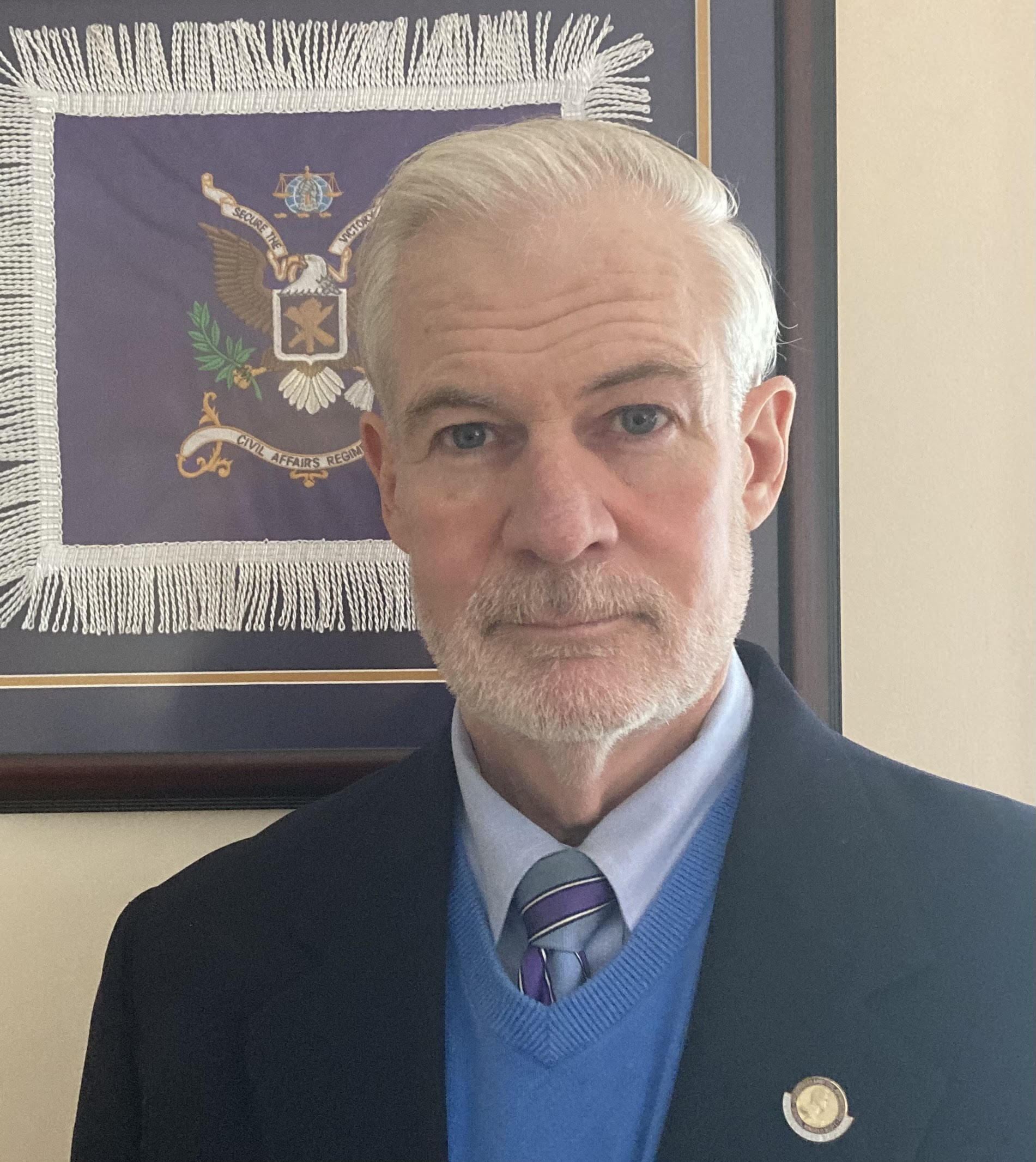
In other words, trained and capable CA and MG personnel, empowered to address complex civilian challenges, turned a longstanding military problem into an advantage that helped commanders “Secure the Victory.”
Our next post will discuss applying these lessons and takeaways to the next LSCO.
Questions for our teammates: Do you agree with the conclusions and takeaways presented in this post? Do you have any observations of CA in LSCO from your experience in named operations, training events, or exercises you’d like to share?
Send a note to the Civil Affairs Team Room.
Subscribe for updates to the Civil Affairs Team Room Blog
Don’t forget to check out our affiliated sites
Quiet Signal (formerly LC38 Brand) – Use code CATR2026 at checkout
Aerial Resupply Coffee – Use code CATR2026 at checkout
One response to “CATR Post #38 – LSCO Wrap-up Part 1: What are the Lessons of CA in WWII?”
[…] inserted for anyone who hasn’t read the previous posts, the wording above is a direct lift from CATR #38 and is based on studying examples of CA and MG in WWII since CATR #28. If we update the language to […]