
6-minute read; Researched and edited with AI assistance.
METT-TC(I). Wait, what?
Not long ago, I was conducting research at work when I came across an interesting term: METT-TC(I). I was very familiar with METT-TC, a mnemonic for the mission variables: mission, enemy, terrain, troops and support available, time available, and civil considerations (FM 3-57, Civil Affairs Operations, p. 2-16). I had never seen the “(I)” before, but I figured it stood for “information.” I Googled the term and found that it was included in the 2022 version of FM 3-0, Operations, published one year after FM 3-57, which I had apparently missed when I skimmed it four years earlier:
“The mission variables are mission, enemy, terrain and weather, troops and support available, time available, and civil considerations, each of which have informational considerations. The mission variables are represented as METT-TC (I)[…] Informational considerations are those aspects of the human, information, and physical dimensions that affect how humans and automated systems derive meaning from, use, act upon, and are impacted by information. […]
_________________________________________________________________
Note. METT-TC (I) represents the mission variables leaders use to analyze and understand a situation in relationship to the unit’s mission. The first six variables are not new. However, the pervasiveness of information and its applicability in different military contexts requires leaders to continuously assess its various aspects during operations. Because of this, “I” has been added to the METT-TC mnemonic. Information considerations are expressed as a parenthetical variable because they are not an independent consideration, but an important component of each variable of METT-TC that leaders must understand when developing understanding of a situation.”
_________________________________________________________________
Source: FM 3-0, Operations, 1 October 2022. Bold in original; underline added for emphasis.
That got me thinking about the origin story of METT-TC.
First, METT to METT-T.
When I was a Plebe at West Point in 1980, there were only four letters: METT, for mission, enemy, terrain, and troops available. A Copilot search for the addition of the third T led me to a lengthy article by a Lithuanian Armed Forces officer, published in Military Review Online in October 2022, titled “A New Combat Analysis Framework.” In it, Major Gintautas Razma said, “Unfortunately, scholarly articles fail to provide sources for the appearance of the METT. In August 1982, a new official METT-T (mission, enemy, terrain, troops, and time available) framework emerged, though it was fragmented and seemingly from nowhere.” So, by the time I graduated from the Academy in 1984, the Army had accepted that the time available to a planner from receipt of mission to execution was a critical factor in mission analysis.
Then, METT-T to METT-TC.
From July 1993 to June 1995, I served in the Doctrine Division of the Directorate of Training and Doctrine (DOTD) at the U.S. Army John F. Kennedy Special Warfare Center and School (USAJFKSWCS) at Fort Bragg, NC. The division included doctrine writers for special forces (SF), civil affairs (CA), and psychological operations (PSYOP). It comprised four SF NCOs, one CA captain (me), and one PSYOP major, all under an SF lieutenant colonel division chief, with an SF major as deputy division chief. There was also one GS civilian secretary.
One day in 1994, Major Bob Snyder, the deputy division chief, and one of the NCOs came to me with an idea. They said that, given the types of operations the Army had been conducting in Panama, Kuwait, Northern Iraq, Somalia, Rwanda, Haiti, and other places since the wall came down in Germany, it was time to add a C for civilians to METT-T. They defined civilians as any non-combatant on the battlefield, including local nationals, foreign government officials, non-governmental organizations, the media, and contractors. They asked whether I agreed with that definition. I said it pretty much described the civilians I had seen and worked with in Somalia the year before, so I concurred.
Major Snyder sent the definition to the Combined Arms Doctrine Division (CADD) at the U.S. Army Training and Doctrine Command’s (TRADOC’s) Combined Arms Center (CAC) at Fort Leavenworth, Kansas, the lead authority for all Army doctrinal publications. When I left USAJFKSWCS in the summer of 1995, I’d heard that although several civilian and military doctrine writers at CAC agreed with MAJ Snyder’s suggestion, a senior civilian leader there did not.
First heard, but undefined.
In early 2000, when I was a major on the G3 staff of the U.S. Army Civil Affairs and Psychological Operations Command (Airborne) (USACAPOC(A)), I attended the 3-month Sustaining Base Leadership and Management (SBLM) program, taught by the Army Management Staff College (AMSC) at Fort Belvoir, Virginia. The course was designed for mid-grade Department of the Army Civilians (typically GS-11 through GS-13) and selected military personnel (field-grade officers, chief warrant officers, and sergeants major). It prepared them for leadership and management roles within the Army’s sustaining base (defined in an AMSC brief as “anything to the rear of a soldier’s bayonet that supports soldiers on the battlefield”). Attendees were generally 95% civilian and 5% military. I was among the 5%.
Successful completion of the course required submitting a research paper on a topic of the student’s choice. I chose to analyze and write about a potential role for civil affairs in what was then called Domestic Support Operations (DSO), now known as Defense Support of Civil Authorities (DSCA). [Incidentally, I won a writing award for that paper and later submitted it to Special Warfare Magazine, which published it the following winter.]
Toward the latter part of the course, some instructors began using the term METT-TC, with the C standing for civilians. Since Major Snyder had tried to make that happen six years earlier, I was intrigued and asked them how the Army defined civilians. None could tell me. I gathered it was an emerging term from Fort Leavenworth, but when I looked it up, I could only find it in a manual for Army chaplains. Recalling my conversation with MAJ Snyder in 1994, I decided to write an extra paper titled “Analyzing the C in METT-TC.” In it, I described the different kinds of civilians in an area of operations and, drawing primarily on my experience in Somalia, explained how planners needed to treat them as separate entities based on their distinct roles and categories. I left it with my primary instructor and shared it with the USACAPOC(A) G3.
Finally accepted and defined.
Later that year, I was assigned again to USAJFKSWCS as a doctrine writer. One of our tasks was to review and comment on doctrinal manuals from across TRADOC to ensure that references to our branch or functional area were accurate and to integrate emerging doctrine related to our function into our manuals.
Around 2001 or 2002, the Army decided to split FM 101-5, Staff Organization and Operations, into FM 5-0, Army Planning and Orders Production, and FM 6-0, Mission Command: Command and Control of Army Forces. FM 6-0 was staffed and published first.
METT-T had been a foundational analytical framework used throughout the military decision-making process (MDMP) outlined in FM 101-5. When our office received the draft of FM 6-0 for review and comment, I’d heard that METT-T had officially been upgraded to METT-TC, and I wanted to see for myself, especially since I was using it in the TTP I was writing. Sure enough, it had. Apparently, the senior civilian who had refused to add the C in 1994 had finally retired, and his successor supported Major Snyder’s suggestion. When the final version of FM 6-0 was published in August 2003, it marked 8 years from the time TRADOC received a suggestion from USAJFKSWCS calling for a monumental change to mission analysis until TRADOC accepted and published it.
Yet, there was a surprise in how FM 6-0 described the analytical methodology for this new C. That is the subject of our next post.
Questions for our teammates: What is your assessment of the Army adding informational considerations in METT-TC(I)? How have you analyzed the “C” and the “(I)” in your mission analyses?
Send a note to the Civil Affairs Team Room.
Subscribe for updates to the Civil Affairs Team Room Blog
Don’t forget to check out our affiliated sites
Quiet Signal (formerly LC38 Brand) – Use code CATR2026 at checkout
Aerial Resupply Coffee – Use code CATR2026 at checkout
Dennis J. Cahill, Sr.
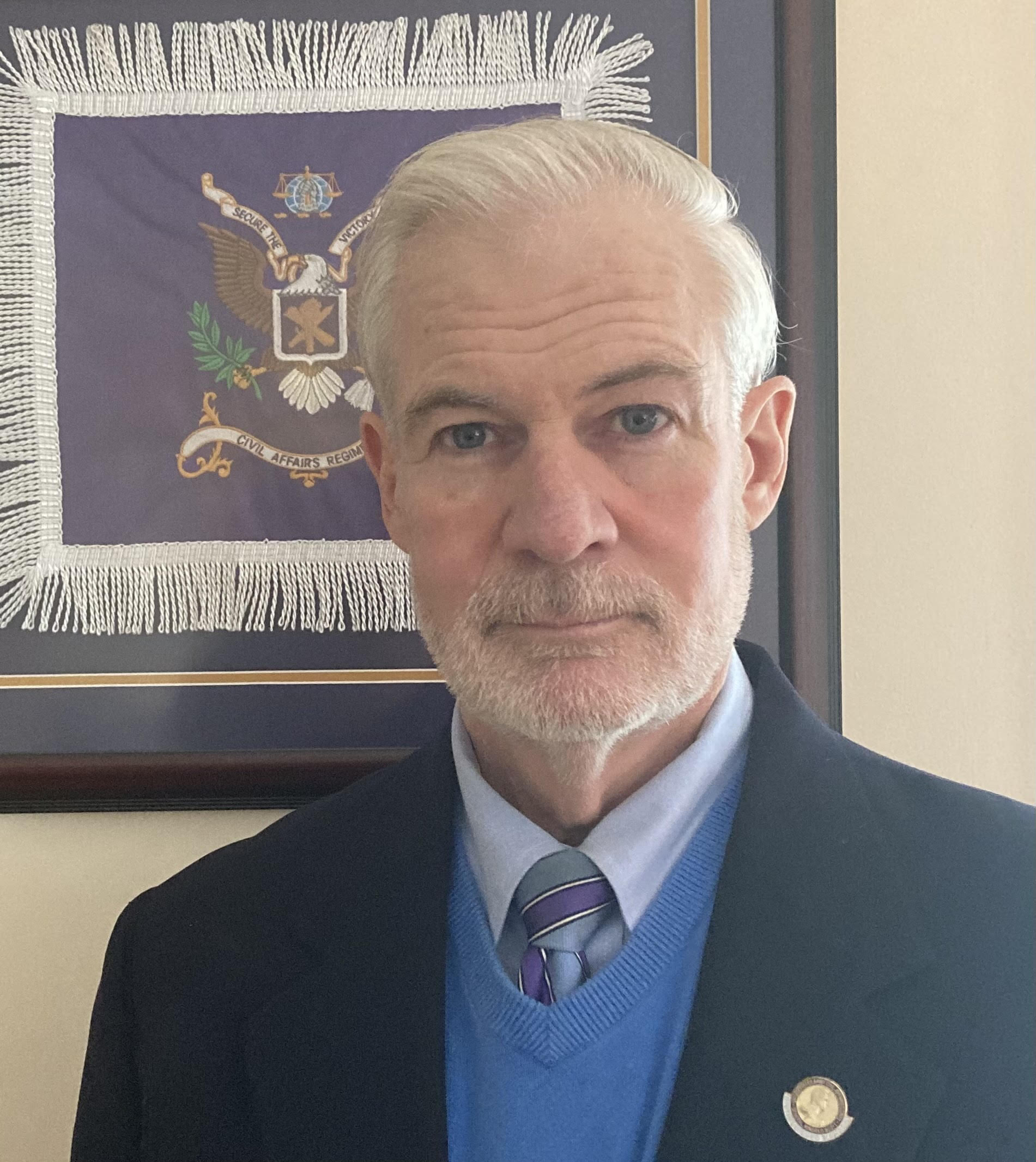
Colonel (Retired) Dennis J. Cahill, Sr., retired from active duty in 2011 after serving 27 years in the U.S. Army, 19 of which as a Civil Affairs officer in both the active and reserve components. He enjoys researching, writing, editing, and discussing Civil Affairs topics.