6-minute read
By Sergeant Major (Ret.) Chet Sechrest
Introductory Note from the Team Chief: Last summer, SGM (Ret.) Chet Sechrest participated in the discussion that became CATR Post #9. He and I continued talking, and I asked him to share a little about his background and his transition from another high-speed branch to civil affairs, using some of the questions I’ve answered in other posts from my own experience. This is his story.
COL DJC
What did you know about civil affairs before you became a CA NCO?
From my special forces (SF) training and reading about SF operations in Vietnam, I knew that civil affairs operations were conducted to shape the operational environment. In the late 1990s, my SF team served on a 6-month Joint Commission Observer (JCO) tour as part of the Stabilization Force (SFOR) in Bosnia.
I soon realized that this mission was purely a civil affairs mission in every respect. We lived in a neighborhood community and had 5 interpreters assigned – a Muslim, a Serb, a Croat, a woman, and a U.S. interpreter. This allowed us to take the right interpreter to the different communities where we had engagements. Taking the wrong interpreter to the wrong community was a problem. Our mission was to engage the local populace and community leadership, political parties, international organizations/non-government organizations (IOs/NGOs), and business leaders on a daily basis to keep our fingers on the pulse of the operational area, identify issues of concern, and coordinate with others to make things happen. Our reports to higher became the weekly intelligence summary reports sent to all.
Why did you choose to work in civil affairs?
I had a great experience as a JCO. Over time, we saw tangible results from our engagements. We felt we actually accomplished something that made an impact. I liked the freedom to make decisions and the ability to take action to make things happen, all within command guidance. It came down to job satisfaction and the feeling that I did something of value that made a difference in this CA-like mission.
When I returned home from that deployment, I called the SF branch manager and requested to be assigned to the 96th Civil Affairs Battalion (Airborne) (96th CA Bn (Abn)), which had 18-series billets at the time.
After 5 years in the battalion, during which time I served on a team, on battalion staff, and as a company first sergeant, I went through selection and the Operational Advisor course and served as an Operational Advisor in the Asymmetric Warfare Group (AWG). While there, the 95th CA Brigade (Special Operations) (Airborne) (95th CA Bde (SO)(A)) and its subordinate battalions were standing up, and CA had become a branch in the active component (AC). The brigade command sergeant major, CSM Tim Strong, asked me to reclassify to CA to help build the new AC 38B military occupational specialty (MOS) for Civil Affairs NCOs, so I did.
What is the biggest thing you’ve learned about civil affairs?
One thing I learned about CA is the high level of social maturity required for the job. When a mission came down, we would not just train for it; we would prepare for it. When mission analysis identified the need for specific skills or personalities, we would form the team and assign duties with Soldiers selected for their skill sets, not their rank.
When I was assigned to the 96th CA Bn (Abn), the average age was 37, with 15 or more years of service. Almost all 18-series enlisted personnel had 10 or more years of team time and multiple deployments under their belts before they arrived. The team leaders were all senior captains with prior company command experience, bringing greater depth of experience and leadership maturity to the team. I learned that this level of experience enabled teams to deploy back-to-back to multiple countries without the required training in between.
When the new 38B MOS was activated, 70% of the 18-series Soldiers in the 96th CA Bn (Abn) were reassigned back to SF Groups, resulting in a significant loss of the knowledge needed to build the new CA brigade. Consequently, new people with no CA experience ended up teaching newer people, and knowledge of how to conduct CA operations was lost.
For example, when I reclassified to 38B and helped stand up the 91st CA Bn (SO)(A), fewer than a handful of Soldiers had been there for more than a year. When newly graduated 38B Soldiers arrived, the average age dropped to 23, with fewer than 4 years time in service in the Army. They lacked social maturity. Almost all came from non-combat arms MOSs and lacked tactical skills, so teaching them how to survive in combat became the priority over teaching CA skills. I spent 6 months teaching them how to shoot, move, and communicate before sending them into a war zone. Upon their return from deployment, the teams were split to form new teams in the build companies. Consequently, a new person with only schoolhouse training and one deployment became the Team Sergeant for the build company.
Fast-forward years later, and you have an organization built by people with little experience that has lost vast amounts of knowledge and understanding of what CA can do and how. These same new leaders have been making recommendations and changes based on their limited experience. They have forgotten the power they have to effect change globally; they can’t deploy back-to-back, etc. If you were to ask them to provide metrics demonstrating their actual accomplishments, they would have a hard time producing any. When you rotate companies on 6- to 11-month rotations, you would expect to see programs and projects progressing toward improving and shaping the environment. There is no documentation that CA today is as effective as it could be.
When new people teach new people, a lot gets lost in translation. The one thing I notice is the lack of metrics in CA papers that show actual mission successes. How we train determines how we perform, and, in my opinion, there is a huge disconnect between the mission skills needed and what we choose to train for.
What I am trying to say is that Civil Affairs has forgotten the abilities and the power to effect change they once had. One team member could establish a national program in a country simply by observing the situation and bringing people together to discuss and implement solutions. How many schools, clinics, wells, combat lifesaver courses, etc., actually shape an environment?
Questions for our teammates: If you are a CA NCO who reclassified from another MOS, when was that, and, using the three questions in this post, what was your experience like? Tell us your story.
Send a note to the Civil Affairs Team Room.
Subscribe for updates to the Civil Affairs Team Room Blog
Don’t forget to check out our affiliated sites
LC38 Brand
Aerial Resupply Coffee
Chet Sechrest
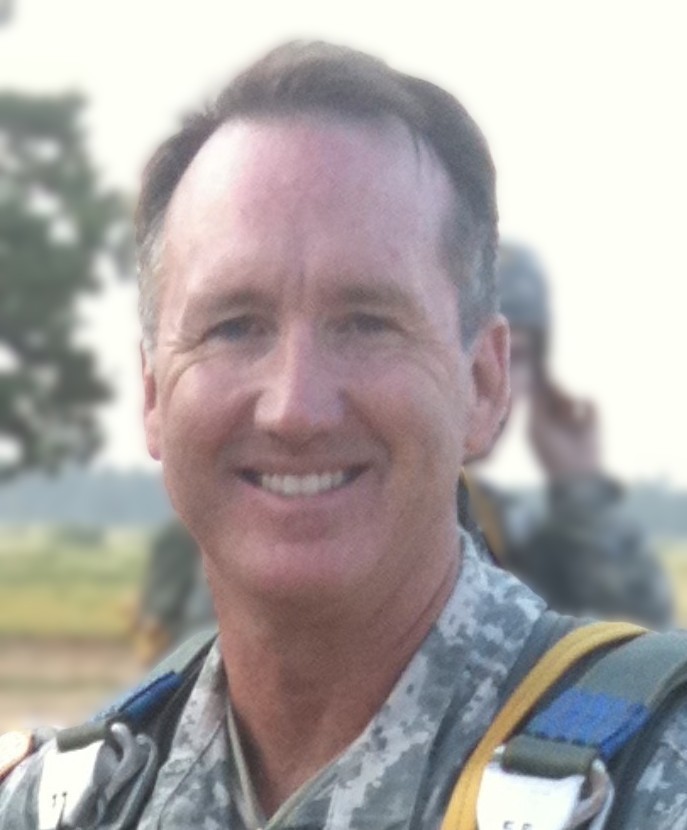
Sergeant Major (Retired) Chet Sechrest is a former Special Forces and Civil Affairs noncommissioned officer who currently serves as the Senior Project Engineer at GE Vernova’s Natrium Nuclear Power project. During his 28-year Army career, he developed skills in nation-building, interpersonal relationships, and the importance of awareness, audience understanding, and achieving organizational goals when working with others. As an Operational Advisor, he saw firsthand the disconnect between ground truth and what command chooses to see, and he understands the importance of telling leaders what they need to hear, not what they want to hear, to make good decisions. In his spare time, he has restored five 1965 Ford Mustangs and is currently working on his sixth.